Sometimes a pressure washer may lose pressure, leak water, or develop issues that prevent it from delivering the power needed to properly clean surfaces, environments, vehicles, and machinery.
Like any machine, it can experience malfunctions that affect performance. The good news? In most cases, these are simple problems that are easy to identify and fix.
In this guide, you’ll find the most common pressure washer issues, along with their causes and practical solutions to get back to work quickly.
TOPICS COVERED
PRESSURE WASHER HAS NO PRESSURE: WHAT TO DO
PRESSURE WASHER IS LEAKING WATER
NO WATER IS COMING OUT OF THE NOZZLE
PRESSURE WASHER WON’T START
PRESSURE WASHER PULSATES OR SHUTS OFF
PRESSURE WASHER NOT DRAWING DETERGENT
PRESSURE WASHER VIBRATES AND MAKES EXCESSIVE NOISE
MOTOR MAKES A BUZZING NOISE
PRESSURE WASHER IS NOT PRODUCING HOT WATER
PRESSURE WASHER MAINTENANCE
WHEN TO CONTACT SERVICE
MORE QUESTIONS? CONSULT OUR FAQ

PRESSURE WASHER HAS NO PRESSURE: WHAT TO DO
This is one of the most common and frustrating issues. When pressure drops, cleaning efficiency is significantly reduced.
Common causes:
- Insufficient water supply
- Dirty or clogged inlet filter
- Clogged or worn nozzle
- Incorrect pressure setting
- Damaged pump
Solutions:
- Make sure the water tap is fully open
- Clean or replace the inlet filter
- Check and clean the nozzle
- Adjust the pressure correctly
- If the issue persists, contact technical support
PRESSURE WASHER IS LEAKING WATER
Leaks are quite common and often underestimated, but they can affect performance.
Possible causes:
- Worn seals
- Loose fittings
- Damaged hose
Solutions:
- Tighten the fittings
- Replace worn seals
- Check the condition of the hose
If the leak comes from the pump, contact a technician.
NO WATER IS COMING OUT OF THE NOZZLE
If no water comes out, the machine cannot be used.
Things to check:
- Clogged nozzle
- Kinked or blocked hose
- No water supply
Solutions:
- Remove and clean the nozzle
- Check the water flow
- Ensure there are no obstructions in the hose
PRESSURE WASHER WON’T START
This may seem serious, but it’s often quick to fix.
Common causes:
- Faulty power outlet
- Damaged cable
- Defective switch
- Blown fuse
What to do:
- Check power connections
- Inspect the cable
- Test the outlet
If everything is fine, the issue may be internal (motor or control board).
PRESSURE WASHER PULSATES OR SHUTS OFF
Irregular operation is often linked to flow issues or internal components.
Possible causes:
- Insufficient water supply
- Air in the system
- Worn valves or seals
- Overheating
- Motor protection device activation
What to do:
- Turn off and unplug the machine
- Let it cool down for 10–20 minutes
- Check:
- water supply
- filters and the nozzle for blockages
- electrical connection
- Restart following the manual instructions
PRESSURE WASHER NOT DRAWING DETERGENT
For models equipped with a detergent function.
Causes:
- Clogged detergent filter
- Incorrect setting
- Detergent too thick
Solutions:
- Clean the filter
- Adjust the control knob properly (ensure it is fully open)
- Use compatible detergents according to manufacturer instructions
PRESSURE WASHER VIBRATES AND MAKES EXCESSIVE NOISE
This issue can affect stability and user comfort.
Causes:
- Dirty water inlet filter
- Improper air intake
- Insufficient water supply
Solutions:
- Clean the filter
- Check that the intake system is free from dust or debris
- Make sure the tap is fully open and water flow is adequate
MOTOR MAKES A BUZZING NOISE
Common in electric models.
Causes:
- Inadequate electrical system
- Use of unsuitable extension cords
Solutions:
- Ensure the electrical system meets requirements
- Avoid improper extension cords
- Follow the connection specifications in the user manual
PRESSURE WASHER is NOT PRODUCING HOT WATER
For hot water models.
Causes:
- Low fuel level in the boiler tank
- Dirty filter
- Safety thermostat activation
Solutions:
- Check and refill the fuel tank
- Clean or replace the filter
- Let the machine cool down and restart following the manual
GENERAL PRECAUTIONS FOR PRESSURE WASHER CARE
First of all, before using the machine, read the instruction manual carefully. Then, in general terms, follow the safety rules and, even before that, common sense:
- Do not direct the pressure washer jet at people or animals
- Do not wash electrically live objects with the pressure washer
- Do not use the pressure washer on delicate objects and surfaces that could be damaged by the power of the water jet
- Do not use the pressure washer if you are under the influence of medicines, drugs or alcohol and do not let children or people with reduced physical or mental capacity use it
- For electric motor models, do not use the pressure washer if the power cord is damaged and the machine has apparent water leaks
- For internal combustion engine models, do not fuel the pressure washer with inappropriate fuels and do not use it indoors or in spaces where exhaust fumes are close to people, animals or vents
- For hot water models, do not let the pressure washer reach higher temperatures than those indicated in the instruction manual, to avoid damaging seals and the machine components; moreover, do not touch the boiler and other hot components to avoid the risk of burns and scalds, always remembering, after use, to run cold water for a few minutes to let the pressure washer cool down; finally, do not use hot water with accessories that do not withstand high temperatures
COMET COLD WATER PRESSURE WASHERS
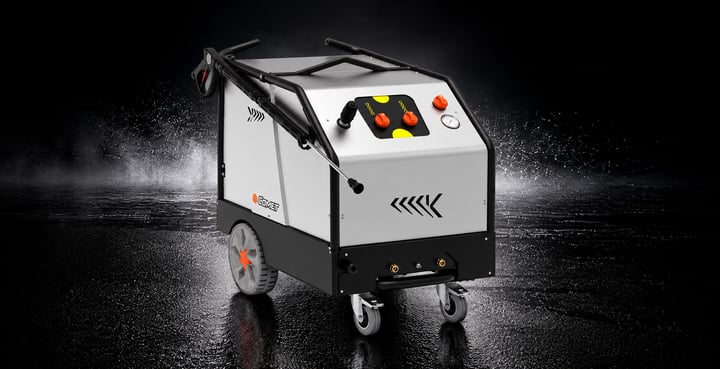
COMET HOT WATER PRESSURE WASHERS
COMET ENDOTHERMIC ENGINE PRESSURE WASHERS

HOW TO MAINTAIN THE PRESSURE WASHER
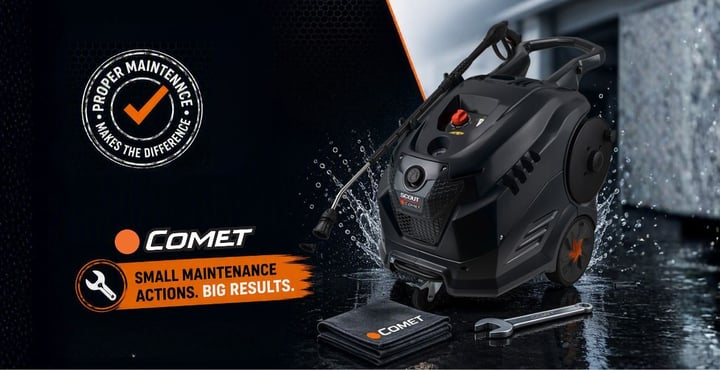
The best way to get the utmost results from a pressure washer and to extend its life is to carry out regular and specific maintenance, according to precise times and ways.
At each use, check if the hose, gun, filter, lances, fittings and power cords are sound, replace damaged parts immediately or contact a specialised service centre for any repairs.
In case of frequent use, monthly check if the filters are well cleaned with water and anti-scale detergent. The same must be done with the nozzles, taking care to clean them from scale with the special pins provided, or to replace them. Equally important is to check the correct oil level inside the pump, providing for any topping up.
Every 3 months, or every 200 hours of operation, have the following important operations performed by a qualified technician:
- Checking the hydraulic circuit
- Checking the pump oil level
- Checking the pump fixing
- Checking filters and nozzles
Every 6 months, or every 500 hours of operation, have the following important operations performed by a qualified technician:
- Checking the suction and delivery valves
- Checking the regulating valve
- Replacing the pump oil
- Replacing filters and nozzles
WHEN TO CONTACT SERVICE
Even if all precautions are taken, the pressure washer may have problems and malfunctions. Some of these, often the result of simple forgetfulness, can easily be solved without a technician's intervention, while to fix more serious troubles it is essential to turn to specialised and authorised service centres. Contact a service centre if:
- The pump is noisy or damaged
- The machine cannot maintain pressure
- There are internal leaks
- The motor does not start despite checks