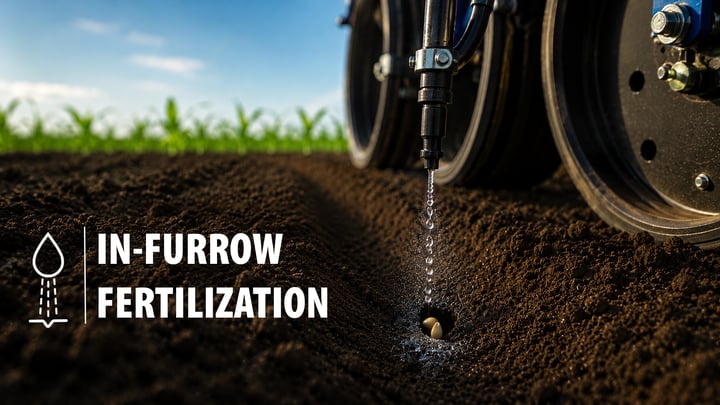
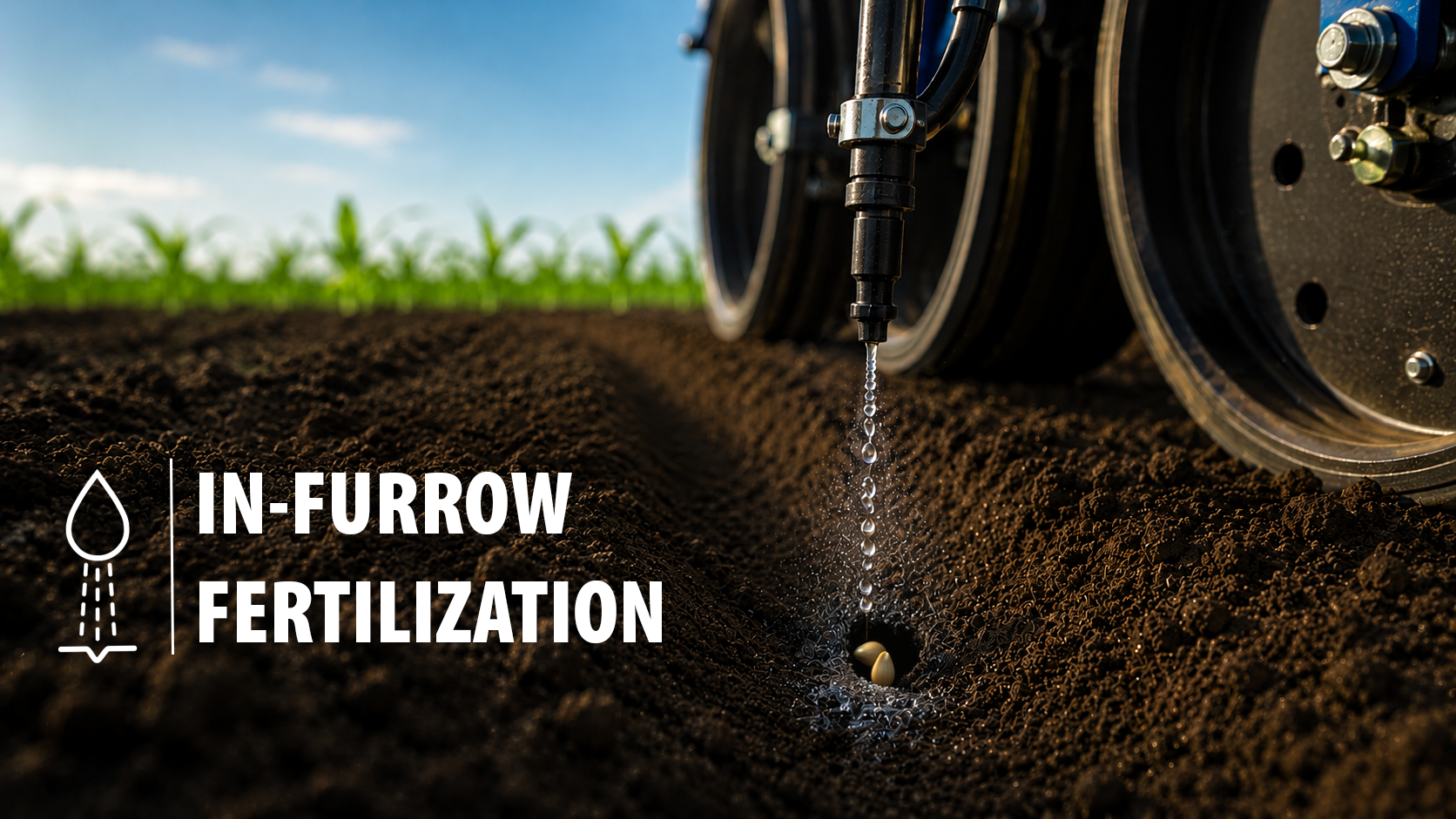
In-furrow fertilization and spray inoculation allow nutrients and inoculants to be applied directly into the seed furrow, close to the seed itself, making them immediately available during the crop’s earliest growth stages.
Compared to broadcast applications, this technique helps reduce volatilization and leaching, improving distribution efficiency while promoting faster and more uniform seedling development.
In this article, we take a closer look at what in-furrow fertilization is, why it performs more effectively than traditional application methods, and why diaphragm pumps are the ideal solution for inoculation systems.
In this context, Comet diaphragm pumps are specifically designed for handling liquid fertilizers and bacterial inoculants. They operate efficiently at the low pressures required, feature materials compatible with living organisms, and are available in multiple capacities and configurations to suit different in-furrow systems.
TABLE OF CONTENTS
WHAT IS IN-FURROW FERTILIZATION?
WHY IT WORKS
SPRAY INOCULATION
INOCULATION METHODS
THE INOCULATION SYSTEM
COMET SOLUTIONS FOR SPRAY INOCULATION SYSTEMS
WHAT IS IN-FURROW FERTILIZATION?
In-furrow fertilization is a technique that involves applying fertilizer directly onto the seed at planting time.
Providing nutrients during the earliest stages of the season supports crop establishment and helps reduce overall fertility-related challenges.
According to a study by South Dakota State University, in-furrow fertilization can increase yields by up to 10% compared to traditional broadcast applications.
Additionally, research from Michigan State University shows that this method reduces volatilization and leaching, improving nutrient efficiency compared to broadcast spreading.
The displaced volume (or pumping capacity) within a pumping chamber is called displacement and is calculated by multiplying diaphragm stroke by diaphragm area.
WHY DOES IN-FURROW FERTILIZATION WORK BETTER THAN BROADCAST APPLICATION?
The main reason is reduced energy waste by the plant.
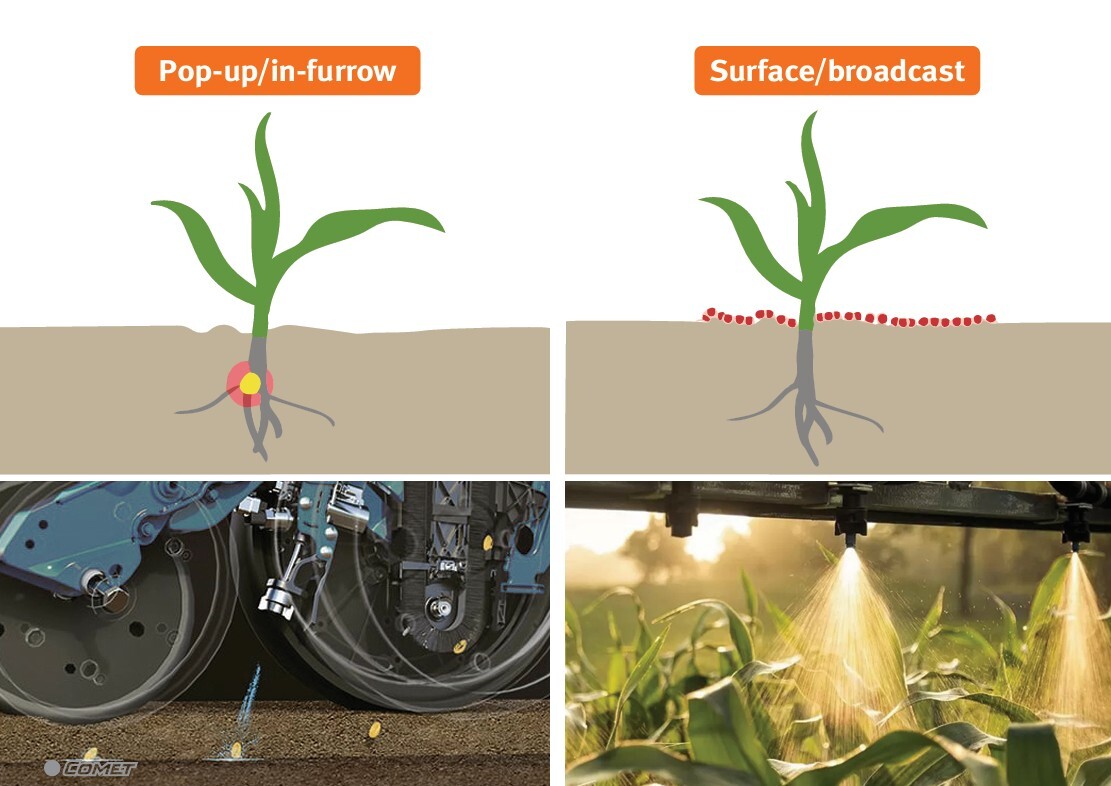
When fertilizer is applied directly at planting, nutrients are already positioned exactly where the seed needs them. After germination, crop roots immediately have access to essential nutrients nearby.
With broadcast applications, however, roots may need to grow significantly before reaching available nutrients in the soil. This expansion requires energy that is essentially “wasted.”
In addition, when fertilizer is spread across the soil surface, two processes can reduce nutrient availability: volatilization and leaching. This results in nutrient loss and lower return on investment.
Another important advantage of in-furrow systems is the reduction in the total amount of nutrients required in the field, helping save both time and money.
THE “POP-UP” EFFECT DURING EARLY GROWTH STAGES
In-furrow fertilizers are immediately available to the seed because they are applied in direct contact with it.
The result is faster, more uniform seedling development and improved crop establishment. This gives plants a stronger start during the critical early stages of growth.
This is commonly referred to as the “pop-up effect,” and the fertilizers used are often called pop-up fertilizers.
This benefit becomes even more important in cold and wet soils, where root growth tends to slow down. Having nutrients readily available near the seed allows plants to continue developing even under less-than-ideal conditions.
SPRAY INOCULATION AND BIOLOGICAL NITROGEN FIXATION
Living organisms need nitrogen because it is a key component of amino acids, which form proteins, and nucleic acids, which make up DNA and RNA.
BNF, or Biological Nitrogen Fixation, refers to the process of converting atmospheric nitrogen into a form that plants and other organisms can use.
In legumes such as soybeans, BNF is carried out by Rhizobium bacteria through a symbiotic relationship with the plant. This process becomes the plant’s primary nitrogen source after the rhizobia infect the roots and form nodules.
When bacteria are not naturally present in optimal conditions, human intervention through inoculation may be recommended. Inoculation can be defined as the process of adding effective bacteria to the seed to ensure successful symbiosis.
Human intervention may be necessary in cases such as:
- non-optimal soil conditions, including acidic, excessively hot, or waterlogged soils;
- absence of the specific Rhizobium species or biovar required for the target forage crop.
When properly managed, BNF can fully meet the crop’s nitrogen requirements while increasing grain yield and protein concentration by 40–60%, delivering a very high return on investment.
INOCULATION METHODS
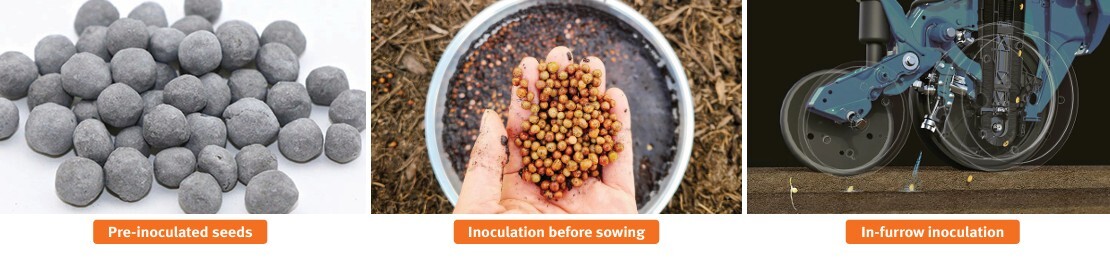
The simplest way to inoculate bacteria is by purchasing pre-inoculated seeds already treated with bacterial blends. The main disadvantage is cost, as treated seeds are more expensive than untreated ones. In addition, inoculant viability can vary significantly.
A second method involves inoculating the seed immediately before planting. The main drawback is that bacterial populations decline over time, reducing effectiveness.
The third method — considered the most effective — is in-furrow technology. Rhizobium is mixed with water to create a liquid inoculant that can be sprayed directly into the seedbed during planting.
According to the University of New South Wales, spray inoculation appears to be the most effective inoculation method for broadacre legumes, consistently delivering excellent root nodulation and high-yield crops.
IN-FURROW FERTILIZATION: HOW THE SYSTEM WORKS
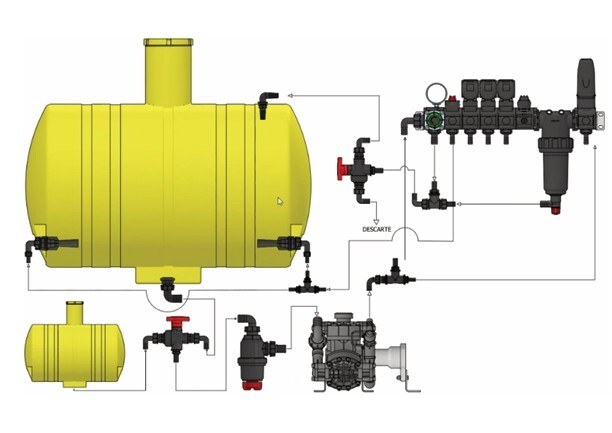
A liquid spray system is typically mounted on a planter as a separate kit.
The spray kit consists of:
- a polyethylene tank sized according to seed application rate;
- a jet agitator, essential for preventing sediment buildup, especially with inoculants that tend to settle quickly at the bottom of the tank;
- a diaphragm pump, the only pump type truly suitable for this application;
- distribution outlets capable of delivering liquid fertilizers into the seed furrow through capillary tubes or nozzles;
- a pressure regulator designed to send one-third of the total flow to the nozzles while recirculating the remaining flow back to the agitator.
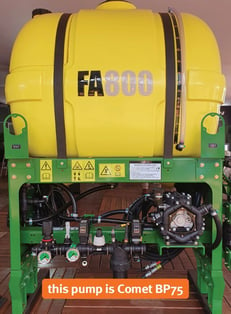
Diaphragm pumps are recommended because piston pumps tend to have a shorter lifespan due to the abrasive nature of the liquid, while centrifugal pumps can damage bacteria because of excessive operating speed.
Pump capacity should be approximately three times the field application rate so that the remaining flow can be redirected to the agitator.
When handling bacteria, pressure should be limited to a maximum of 1.75 bar (25 psi), since higher pressures may damage rhizobia.
COMET SOLUTIONS FOR IN-FURROW APPLICATIONS WITH LIQUID FERTILIZERS
Diaphragm pumps are the ideal solution for in-furrow fertilization spray kits. They are capable of handling abrasive liquids, operating efficiently at low pressures, and — when built with compatible materials — can also be safely used with bacterial inoculants.
Comet BPX25, P36, BP75, BPX120–140, BPX180, and BPX270 diaphragm pumps are available in multiple capacities and configurations to meet the needs of in-furrow systems using liquid fertilizers and inoculants.
BPX25
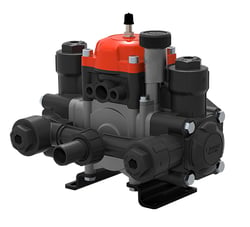
The Comet BPX25 diaphragm pump offers high resistance to corrosion and mechanical stress, ensuring reliable performance, long service life, and reduced downtime.
External manifolds and easily accessible valves simplify maintenance operations. The advanced pump architecture and oversized pressure dampener significantly reduce pulsation, ensuring smooth, linear, and quiet flow even at low operating pressures ranging from 1 to 4 bar (15–60 PSI).
The hollow shaft can be connected directly to standard hydraulic motors without adapters, reducing overall footprint and improving cost efficiency.
Materials are compatible with bacterial inoculants and other living organisms.
P36 e BP75
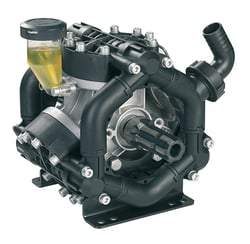
The Comet P36 and BP75 diaphragm pumps provide high resistance to corrosion and mechanical stress, ensuring reliable performance, long service life, and reduced downtime.
External manifolds and accessible valves make maintenance easier, while the advanced design delivers smooth, quiet, and highly linear flow even within the low-pressure range of 1 to 4 bar (15–60 PSI).
The materials used are compatible with bacterial inoculants.
BPX120 – 140
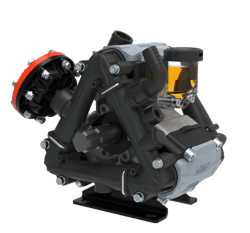
The Comet BPX120–140 diaphragm pump is designed to provide excellent resistance to corrosion and mechanical stress, ensuring long-lasting performance and reduced downtime.
External manifolds and accessible valves simplify maintenance procedures. Its advanced architecture and oversized pressure dampener allow for significant pulsation reduction and smooth, linear, quiet flow even at low operating pressures from 1 to 4 bar (15–60 PSI).
The materials are compatible with bacterial inoculants.
BPX180
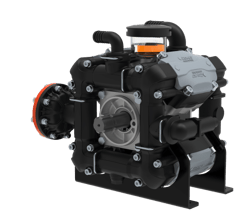
The Comet BPX180 diaphragm pump offers high resistance to corrosion and mechanical stress, delivering reliable long-term performance while minimizing downtime.
External manifolds and accessible valves take maintenance simplicity to the next level. The advanced architecture and oversized pressure dampener significantly reduce pulsation, ensuring smooth, linear, and quiet flow even at low pressures between 1 and 4 bar (15–60 PSI).
The hollow shaft can be directly connected to standard hydraulic motors without adapters, helping reduce space requirements and improve overall cost efficiency.
The materials are compatible with bacterial inoculants.
BPX270
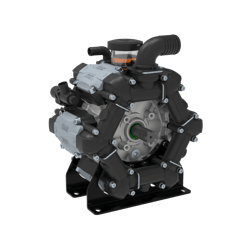
The Comet BPX270 diaphragm pump delivers high resistance to corrosion and mechanical stress, ensuring reliable performance, durability, and reduced downtime.
External manifolds and accessible valves simplify maintenance, while the advanced architecture and oversized pressure dampener provide significant pulsation reduction and smooth, linear, quiet flow even at low operating pressures from 1 to 4 bar (15–60 PSI).
The hollow shaft can be connected directly to standard hydraulic motors without adapters, reducing footprint and improving cost efficiency.
The materials are compatible with bacterial inoculants.